Leather vs Nylon Cat Collar: Which Is Actually Better?
If you've spent any time looking for a cat collar, you've noticed that the choice mostly comes down to two materials: leather and nylon. They're different in almost every way, how they feel, how they age, how they perform and what they say about how you think about your cat.
Here's an honest look at both.
The case for nylon
Nylon has a lot going for it, and it would be dishonest to pretend otherwise.
It's cheap. A nylon collar costs a fraction of a leather one. It's also lightweight, comes in every colour and pattern imaginable and is easy to clean. Most nylon collars can go straight into the washing machine.
For cats who spend a lot of time outdoors in wet conditions, nylon also dries faster than leather and doesn't require any particular care.
If budget is the primary consideration, nylon is a perfectly reasonable starting point.
Where nylon falls short
The problems with nylon tend to emerge over time rather than immediately. And some of them are worth thinking about before you buy.
Nylon is plastic. That's not a marketing point, it's just a material fact. Most nylon collars are made from synthetic polymer fibres that shed microplastics with regular wear and washing. If you're conscious about what materials you're bringing into your home and onto your cat's body every day, that's worth factoring in.
Most nylon collars are also stiff when new and stay that way. They don't soften or mould to your cat's neck, what you feel on day one is what you get indefinitely. This stiffness is one of the main reasons cats resist wearing collars. A collar that feels rigid and foreign against their neck is one they'll spend time and energy trying to remove. For cats with sensitive skin, the synthetic material can also cause irritation, particularly where fur rubs against the collar constantly.
Nylon pills, frays and fades with regular wear. The stitching loosens and within six to twelve months most nylon collars look considerably worse than when you bought them. You end up replacing them, which erodes the cost advantage over time.
There's also an aesthetic reality: nylon collars look like nylon collars. If your cat is going to wear something every day, it's reasonable to want it to look like it belongs on them.
The case for leather
Full-grain leather does something nylon can't - it gets better with wear rather than worse.
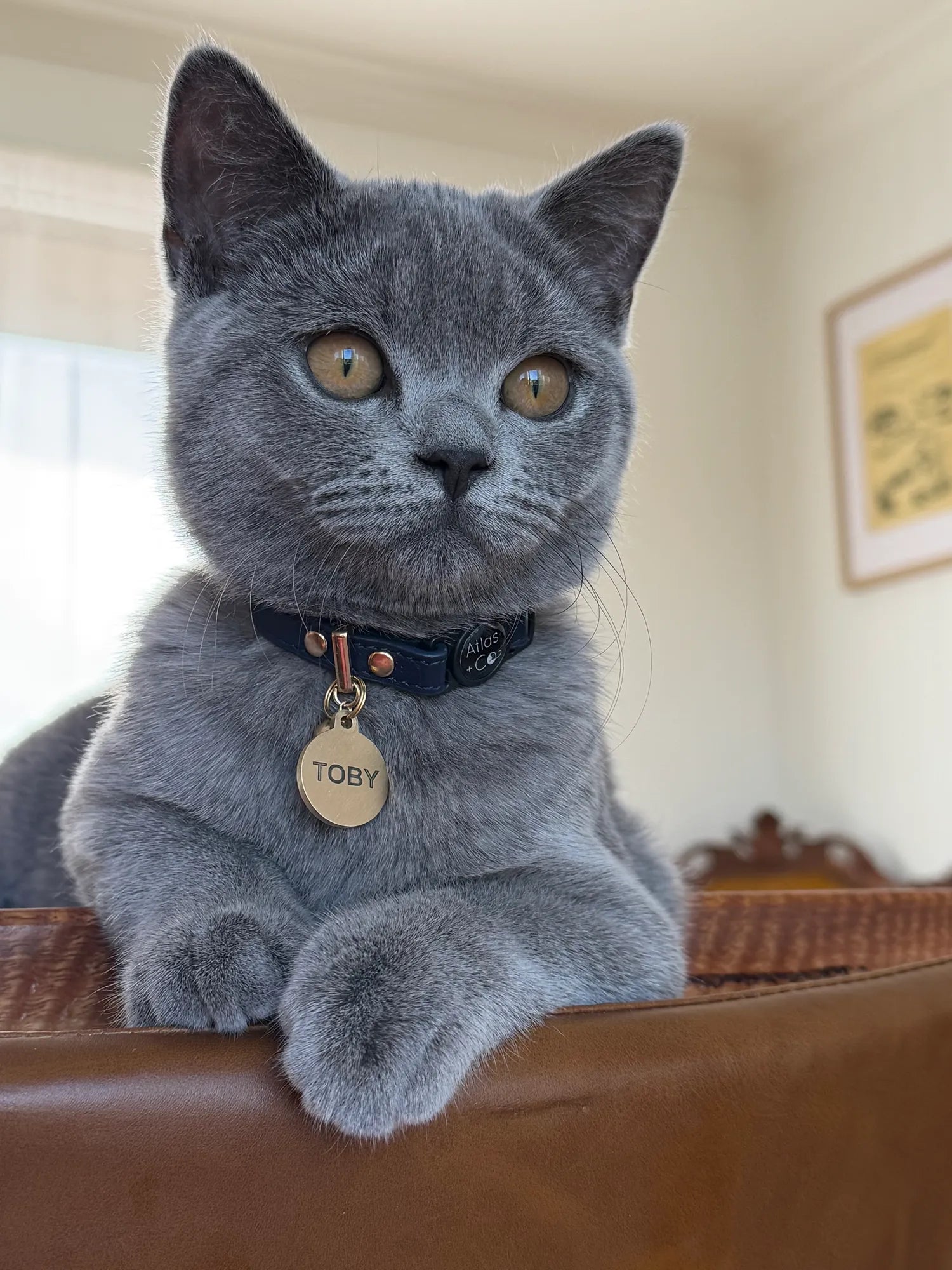
In the first few weeks, a good leather collar softens and begins to mould to your cat's neck. The material that may have felt slightly stiff on day one becomes genuinely comfortable, shaped specifically to the cat wearing it. Leather also has a natural smell that cats tend to accept far more readily than synthetic materials, which is one of the reasons cats who have resisted nylon collars often adapt to leather ones with much less resistance.
Leather is naturally hypoallergenic and breathable, which matters for cats with sensitive skin. Unlike nylon, it doesn't trap moisture against the neck or shed synthetic fibres into your home environment.
A well-made leather collar, properly cared for, will outlast multiple nylon replacements. The hardware holds its finish, the leather develops a patina rather than deteriorating, and the overall appearance improves rather than declining. Over the longer term, the cost per wear of a leather collar is typically lower than the cumulative cost of replacing nylon collars.
And practically: leather is easy to wipe clean with a damp cloth. It doesn't need machine washing and shouldn't be submerged in water, but for an indoor cat or a cat that isn't regularly getting wet, this is rarely a limitation.
The honest trade-offs
Leather costs more upfront. That is simply true. If budget is genuinely constrained, nylon is the more accessible choice.
Leather also requires a little more care than nylon. It shouldn't be left soaking wet for extended periods and occasional conditioning will extend its life. For most cat owners this is a minor consideration but it's worth knowing.
For outdoor cats in consistently wet climates, nylon's faster drying time is a practical advantage worth weighing.
So which is better?
For most cats, in most situations, leather is the better option. It's more comfortable, more durable, better looking, kinder to sensitive skin and free from the synthetic materials and microplastics that come with nylon. The higher upfront cost is offset by longevity and a cat who actually keeps their collar on is worth more than a cheaper one sitting on the floor.
Nylon makes sense if budget is the primary driver, or for cats with very active outdoor lives in wet conditions where fast drying matters more than everything else.
If you're buying a collar for a cat you intend to keep wearing it, which is most of us, leather is worth the investment.
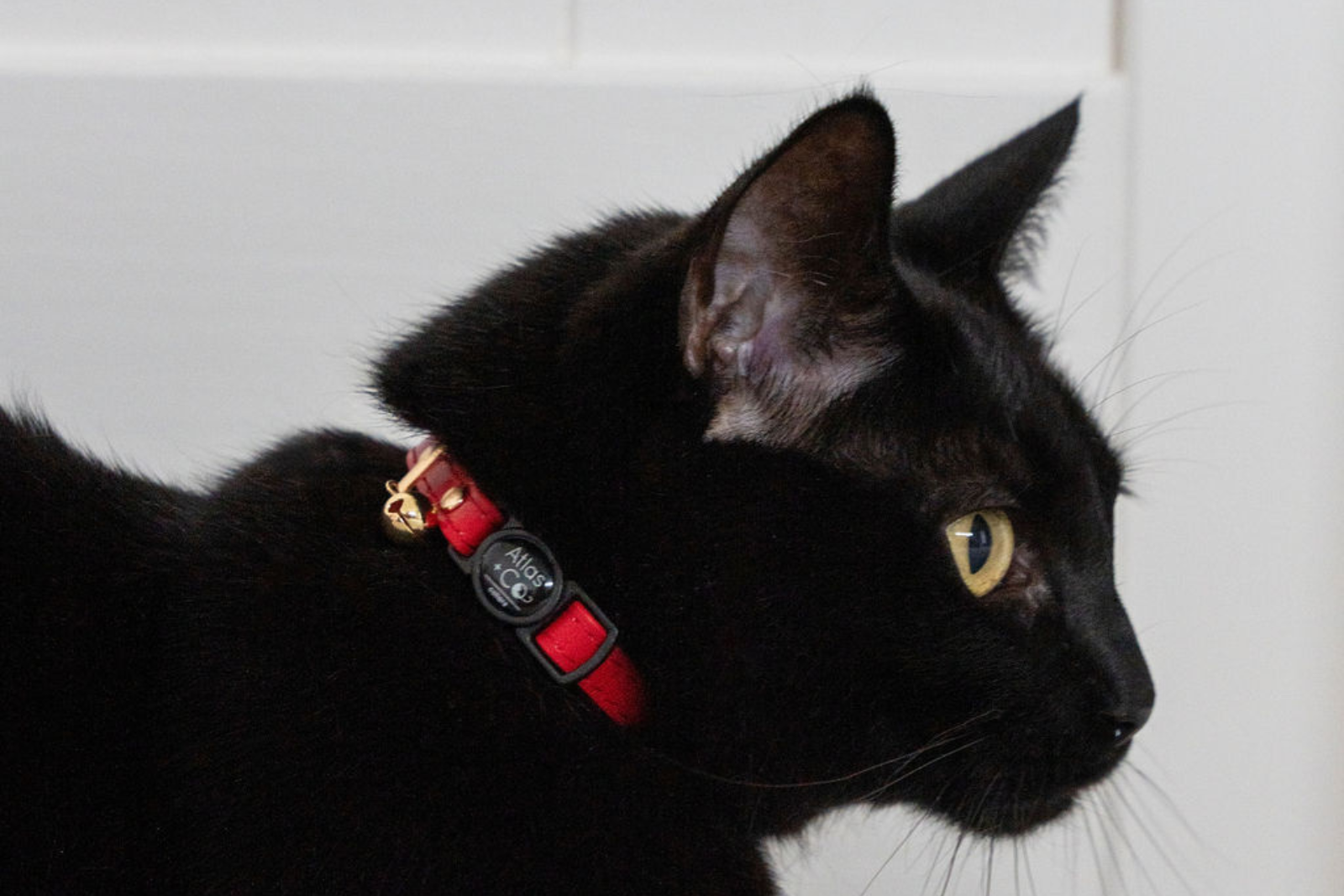
At Atlas + Co, our Classic Leather Cat Collar and Petite Leather Kitten Collar are made from full-grain leather with a vet-approved breakaway buckle, designed to soften with wear and last for years. If you're ready to make the switch, the full range is here.